When people search for hair transplant results, they are usually past the early research stage.
They already know what a hair transplant is, understand the difference between techniques, and may even be aware of recovery timelines.
What they truly want to know now is simple but critical:
“What kind of results can I realistically expect?”
Understanding Hair Transplant Results
Hair transplant results are not instant and not identical for everyone.
They develop gradually as transplanted follicles adapt to their new location and begin producing permanent hair.
A successful hair transplant does not mean “perfect hair.”
It means natural-looking, permanent improvement that matches the patient’s hair characteristics and medical profile.
When Do Hair Transplant Results Become Visible?
Early Visual Changes
In the first few weeks after surgery, the scalp may look healed, but this does not reflect the final hair transplant results.
During this phase, many transplanted hairs fall out as part of the normal shock loss process.
This temporary shedding often causes concern, but it is a natural step toward long-term growth.
Mid-Stage Development
Between the fourth and sixth months, new hairs begin emerging.
At first, these hairs are thin and uneven, which is completely normal.
Visible improvement starts during this period, but density is still developing.
Final Hair Transplant Results
Most patients see their final results between 9 and 12 months after the procedure.
By this stage, hair texture thickens, density improves, and the hairline looks natural and stable.
In some cases, minor improvements continue beyond one year.
What Do Realistic Hair Transplant Results Look Like?
Natural Hairline, Not Perfection
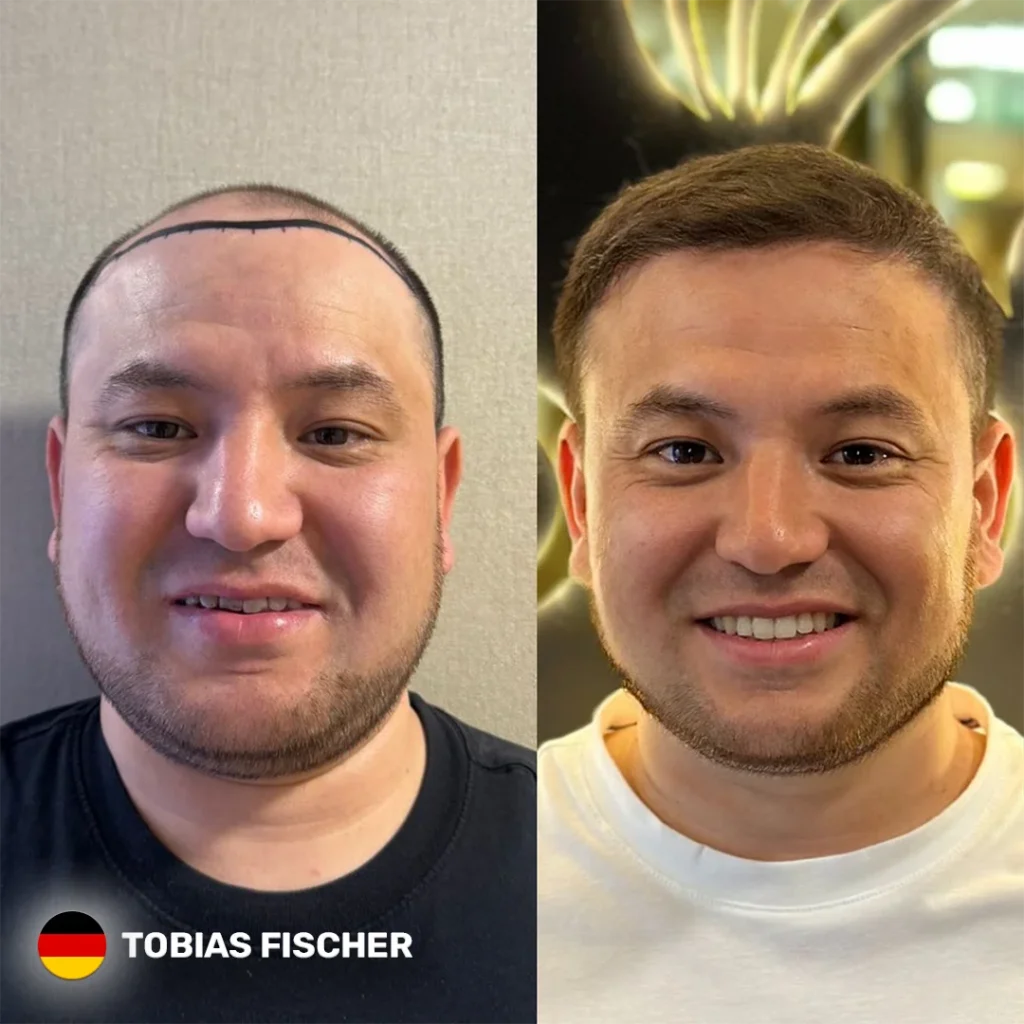
One of the most realistic outcomes of a hair transplant is a natural hairline, not an artificial or overly dense one.
An experienced clinic designs the hairline according to facial structure, age, and future hair loss patterns.
Results should look unnoticeable, not dramatic.
Improved Density, Not Original Density
Hair transplantation redistributes existing follicles; it does not create new hair.
This means density improves significantly, but it does not fully replicate teenage-level thickness.
For most patients, the goal is visual fullness rather than absolute density.
Factors That Affect Hair Transplant Results
Individual Hair Characteristics
Hair thickness, curl pattern, and color contrast with the scalp play a major role in how dense results appear.
Thicker and slightly wavy hair often creates better visual coverage.
Donor Area Quality
Strong hair transplant results depend on a healthy donor area.
Limited donor supply restricts how much coverage can be achieved safely.
Technique and Surgical Skill
While methods like FUE and DHI are important, execution matters more than technique choice.
Angle, depth, and direction of implantation directly influence natural appearance.
Recovery and Aftercare
Proper aftercare and patience during the recovery phase significantly affect final hair transplant results.
Ignoring post-procedure instructions can compromise outcomes.
Realistic vs Unrealistic Hair Transplant Results
| Expectation | Reality |
|---|---|
| Full original density | Improved but natural density |
| Instant results | Gradual growth over months |
| Identical results for everyone | Individual outcomes vary |
| One procedure for all cases | Some patients may need multiple sessions |
| No shedding phase | Temporary shock loss is normal |
Common Unrealistic Expectations About Hair Transplant Results
Many patients develop expectations based on heavily edited photos or social media content.
Results are sometimes portrayed as instant, flawless transformations, which is misleading.
A realistic outcome focuses on long-term improvement, not immediate perfection.
Patients with advanced hair loss should also understand that complete coverage in one session may not be possible.
Before and After Photos: What They Often Don’t Show
Before-and-after images are helpful, but they rarely show:
- Hair styling and lighting effects
- The time gap between photos
- Individual differences in hair type
Hair transplant results should always be evaluated in context, not as guarantees.
How Recovery Influences Hair Transplant Results
Hair transplant recovery is a crucial part of achieving strong results.
During recovery, follicles stabilize, blood supply improves, and hair growth cycles normalize.
Patients who understand and respect the recovery timeline often achieve better long-term outcomes.
This is why realistic expectations and proper aftercare go hand in hand.
Does Everyone Get the Same Hair Transplant Results?
No.
Results are personal, shaped by genetics, age, hair loss pattern, and donor capacity.
A good consultation focuses on what is achievable for the individual—not generic promises.
Who Is a Good Candidate for Natural Hair Transplant Results?
Patients with stable hair loss, sufficient donor hair, and realistic expectations tend to achieve the most satisfying results.
Those seeking instant or perfect outcomes may experience disappointment, even with technically successful procedures.
Hair Transplant Results Over Time
| Time After Procedure | Typical Result |
|---|---|
| 1–3 months | Shedding phase |
| 4–6 months | New hair growth begins |
| 6–9 months | Density improves |
| 9–12 months | Final results visible |
Final Thoughts on Hair Transplant Results
Results are a journey, not a moment.
They reward patience, realistic expectations, and proper aftercare.
A successful hair transplant delivers natural, permanent improvement, not artificial perfection.
Understanding what is realistic—and what is not—helps patients choose the right clinic, the right plan, and the right mindset.
Frequently Asked Questions About Hair Transplant Results
When do hair transplant results start to look noticeable?
Hair transplant results usually start becoming noticeable between the fourth and sixth month after the procedure.
During this period, new hair begins to grow, although it may appear thin or uneven at first.
Clear and visible improvement continues gradually over the following months.
Are hair transplant results permanent?
Yes, hair transplant results are considered permanent.
The transplanted hair follicles are taken from genetically resistant areas of the scalp and continue to grow naturally for a lifetime.
However, surrounding non-transplanted hair may continue to thin over time.
Why do transplanted hairs fall out after surgery?
This temporary shedding, known as shock loss, is a normal part of the hair transplant process.
The hair falls out, but the follicles remain healthy beneath the scalp and later produce new hair.
Shock loss does not affect final hair transplant results.
Do hair transplant results look natural?
When performed correctly, the results look natural and blend seamlessly with existing hair.
Natural results depend on proper hairline design, correct implantation angles, and realistic density planning.
Will my hair be as thick as before hair loss?
Hair transplant results improve density, but they do not usually restore the original thickness from youth.
The goal is natural-looking coverage rather than maximum density in every area.
Do all patients get the same hair transplant results?
No. Results vary from person to person.
Factors such as hair type, donor area quality, age, and hair loss pattern all influence the final outcome.
Can one hair transplant session give full coverage?
In many cases, one session provides significant improvement, but full coverage may require more than one procedure.
This depends on the size of the bald area and the available donor hair.
How long does it take to see final hair transplant results?
Final results are typically visible between nine and twelve months after the procedure.
Some patients continue to see subtle improvements beyond the first year.
Can poor aftercare affect hair transplant results?
Yes. Ignoring aftercare instructions can negatively impact healing and final hair transplant results.
Proper washing, sun protection, and lifestyle habits play an important role in long-term success.
How can I know what results are realistic for me?
A detailed consultation is the best way to understand realistic results for your specific case.
An experienced clinic evaluates donor capacity, hair characteristics, and long-term hair loss patterns before setting expectations.