Hair transplant recovery is one of the most searched topics by people who are seriously considering a hair transplant.
Most patients already know about techniques like FUE or DHI, but what they truly want to understand is what life looks like after the procedure. Hair transplant recovery is only one part of the overall process, and understanding the hair transplant cost in Turkey helps patients plan both treatment and aftercare realistically.
This article explains the hair transplant recovery process in a clear, realistic, and experience-based way—without exaggeration or unnecessary fear. To better understand why certain recovery stages occur, it helps to know what is a hair transplant is and how the procedure works at a follicular level.
Understanding Hair Transplant Recovery
Hair transplant recovery is not a single moment, but a gradual healing process that happens in stages.
While the procedure itself is minimally invasive, the scalp needs time to heal, and transplanted follicles need time to adapt before producing new hair.
Most concerns during recovery are temporary and expected when the procedure is performed correctly, and aftercare instructions are followed.
Hair Transplant Recovery Timeline
The First Day (Day 0)
On the day of the hair transplant, mild redness and tightness are common in both the donor and recipient areas.
Local anesthesia wears off within a few hours, and most patients feel comfortable enough to rest without pain.
The first night is important. Sleeping with the head slightly elevated helps reduce swelling and protects the grafts.
Days 1 to 3: Early Healing Phase
During the first few days, swelling may appear on the forehead and sometimes around the eyes.
This does not indicate a problem—it is a normal reaction of the body.
Redness and mild sensitivity are also expected. These symptoms usually peak around day two and begin to improve naturally.
Days 4 to 7: Scabbing and Skin Repair
Small scabs begin forming around the transplanted grafts.
This is a sign that the scalp is healing and the follicles are settling into place.
Gentle washing is usually allowed during this phase. Scabs should never be scratched or removed by force, as this can affect graft survival.
Days 8 to 10: Scabs Fall Off
By the end of the first 10 days, scabs start falling off on their own.
Once this happens, the transplanted area looks much cleaner, and the grafts become more secure.
This stage marks the end of the most delicate part of hair transplant recovery.
Weeks 2 to 4: Surface Healing Completes
At this point, the scalp looks mostly healed.
Redness fades, the donor area blends in, and patients usually feel comfortable returning to social life.
However, although the skin looks normal, internal recovery is still ongoing.
Months 1 to 3: Shock Loss Phase
This is the phase that confuses many patients.
Transplanted hairs often fall out during this period, a process known as shock loss.
This does not mean the transplant has failed. The hair follicles remain healthy under the skin and prepare for new growth.
Shock loss is temporary and completely normal in hair transplant recovery.
Months 4 to 6: New Hair Starts Growing
New hairs begin to emerge, often thin and uneven at first.
Growth gradually becomes stronger and more consistent as the months pass.
This is when patients start seeing visible improvement.
Months 6 to 12: Final Results Appear
Hair thickness, density, and texture continue to improve.
By the end of this period, results are considered complete for most patients.
In some cases, minor improvements continue beyond 12 months.
Hair Transplant Recovery Timeline Table
| Phase | What to Expect | Normal? |
|---|---|---|
| Day 0 | Redness, tightness | Yes |
| Days 1–3 | Swelling, sensitivity | Yes |
| Days 4–7 | Scabs form | Yes |
| Days 8–10 | Scabs fall off | Yes |
| Weeks 2–4 | Healed appearance | Yes |
| Months 1–3 | Shock loss | Yes |
| Months 4–6 | New hair growth | Yes |
| Months 9–12 | Final results | Yes |
Does FUE or DHI Change Recovery?
Hair transplant recovery is very similar for FUE and DHI.
DHI may cause slightly less scabbing in the recipient area, while FUE is often preferred for larger transplant sessions. While the overall healing process is similar, recovery can feel slightly different depending on the method used, such as FUE vs DHI hair transplant.
In reality, recovery quality depends more on proper technique and aftercare than on the method itself.
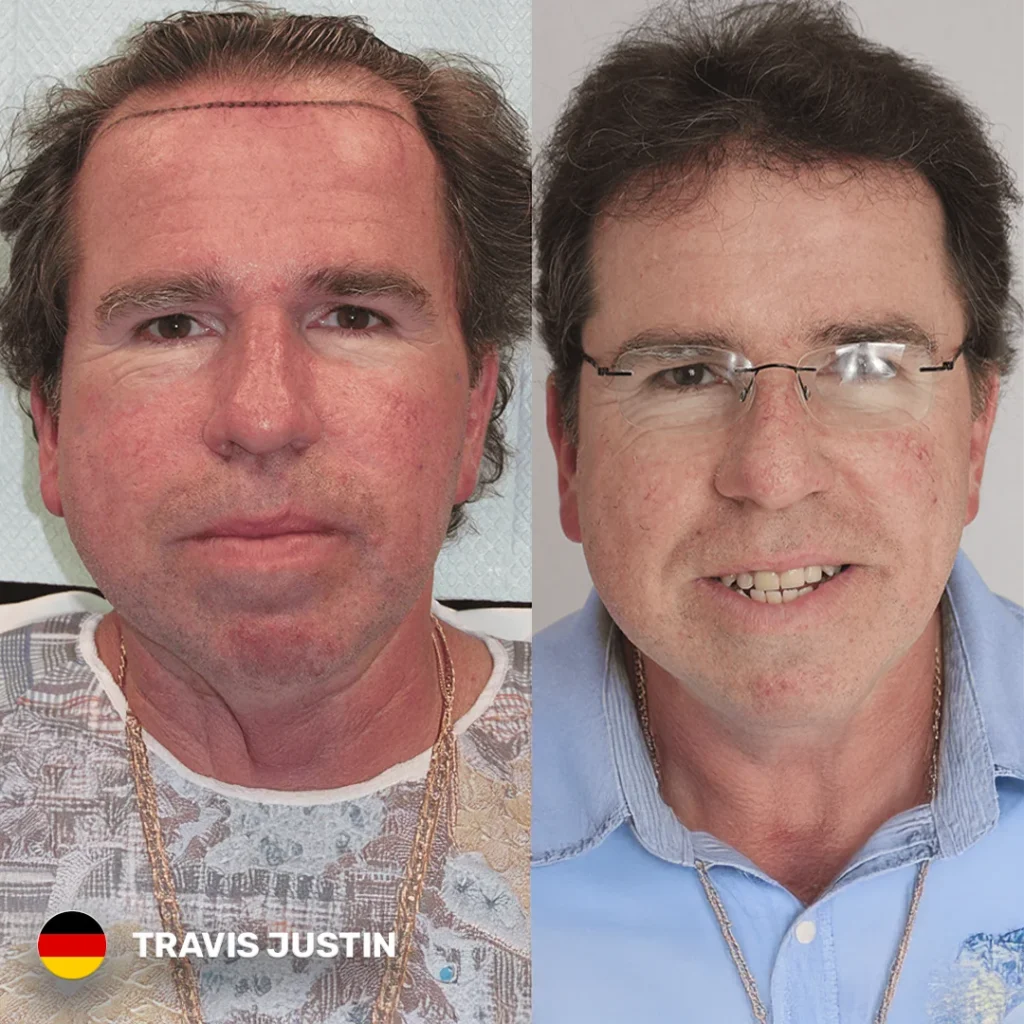
Supporting a Smooth Hair Transplant Recovery
Following medical instructions carefully is the most effective way to protect results.
Avoid smoking, protect the scalp from sun exposure, and do not rush back into intense physical activity.
Small habits during recovery can make a noticeable difference in final outcomes.
Frequently Asked Questions (FAQ)
How long does hair transplant recovery take?
Initial healing takes about 10 days. Full recovery and final results usually take between 9 and 12 months.
Is swelling after a hair transplant normal?
Yes. Swelling during the first few days is common and temporary.
When can I wash my hair after a hair transplant?
Gentle washing usually starts a few days after the procedure, following your clinic’s instructions.
What is shock loss in hair transplant recovery?
Shock loss is a temporary shedding of transplanted hairs. The follicles remain healthy and regrow new hair.
When will I see the final hair transplant results?
Most patients see final results between 9 and 12 months after the procedure.
Final Thoughts
Hair transplant recovery is a process that rewards patience.
Temporary symptoms like redness, scabbing, and shock loss are normal stages on the path to permanent results.
Understanding what to expect helps patients stay calm, confident, and realistic throughout recovery.